When you hear the word, Brooklyn, what comes to mind? In days of old, you might say"Brooklyn Dodgers", or perhaps people who say dese dem, and dose. However, if you're up on the hot borough of today, you're probably thinking artists, techies, coffee shops, yoga studios and lofts. While these cannot yet be found in all of Brooklyn, they are all over
Williamsburg Brooklyn as it is today, and has been for the last decade or so. Another word that might spring to mind is hipster, and truth be told, it's a term that is giving Williamsburg, and the people to which it refers, a misunderstood reputation.
While much about "old" Williamsburg may have become mythic, some concrete facts remain unchanged. Five subway lines whisk residents to Times Square in 21 minutes, and Union Square in 12. 1,588 trees provide shade, and as of the 2011 census 125,000 called Williamsburg Brooklyn home. And as a sign of their faith that Williamsburg will continue to stay vibrant, Trader Joe’s opened a new store there in the summer of 2015, only it’s second in the borough!
Ugly Duckling Williamsburg Brooklyn

Source: newyork.com
Like the East Village, Williamsburg Brooklyn started out as an affordable, even cheap, place where young artists, dedicated to their creative pursuits, could find a place to live and to set up shop. Like the East Village, before the influx, the area was home to large working class Polish, Jewish, and Latino communities. And while both neighborhoods were affordable and steeped in the lure of old New York, neither could add elegance, charm, or beauty to its lists of attributes. While the East Village may have been little but tenements and mom-and-pop grocery stores and bodegas, Williamsburg was downright ugly, but perhaps that was its charm. It had an intriguing mix of architecture.
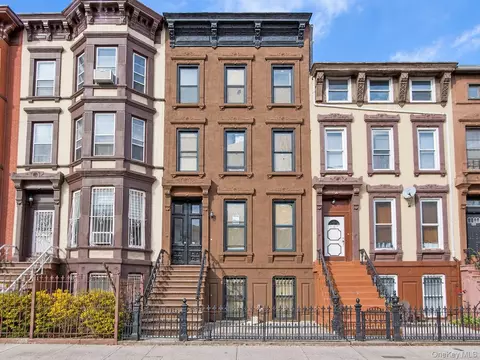
A walk-through the neighborhood often did and still does, in some areas, lead to Italianate townhouses of brick; old-law brick tenements and yellow-brick dumbwaiter tenements; wood frame houses decked out in vinyl siding; post-war light industry buildings; and large hulking art deco warehouses with imposing sash windows. Mind you, these might all be found on one block! Artists gravitated toward the industrial buildings and warehouses because not only did they offer expansive work spaces with natural lighting, but the rent was cheap by New York standards.
A State of Hip Emerges

Source: nytimes
Then came the hipsters. The second generation of immigrants to settle in Williamsburg, on the heels of the musicians and artisanal craftsman who followed the artists, hipsters, who were just acquiring their name, there were creative professionals who held steady Manhattan jobs, but were attracted to Williamsburg by its cutting edge culture. It was during this time that Williamsburg began to shroud itself in hip sophistication. If hipsters were looking for cutting edge, there were entrepreneurs ready to help them push the boundaries of cutting edge.
Legitimate music venues that catered to the indie rock scene emerged from industrial settings to draw young stylish audiences from near and far. Art galleries opened their doors, giving the area's artists a chance to showcase their work for the Manhattanites who crossed the bridge or hopped a train to spend a Saturday or Sunday in the New Brooklyn. Yes, Williamsburg was giving Manhattan competition!
North 6th Street became a melange of retail and trendy restaurants. Sushi chefs served sashimi and tuna rolls. Baristas served up soy lattes and double espressos, and bartenders used ingredients no one had heard of to spice up happy hours that lasted into the night. Boutiques showcasing up and coming designers, become neighbors to the vintage clothing boutiques, independent book stores, and handcrafted leather goods stores that had been gradually transforming the shopping area.
Williamsburg Gentrification

Source: thinkingnomads
But back to the hipsters, and why some residents of Williamsburg would just as soon prefer that the neighborhood be known for more than being a place the hipsters transformed. For some reason, hipsters are the fall guy for those who see only the negative side of gentrification. These were individuals who were said to be able to afford to spend money on expensive urban fashions meant to scream unfashionable, and to patronize hair stylists who gave them fastidiously crafted looks that left them looking scruffy, shaggy, and as if they didn't give a fig about how they looked. And oh yes, men spent time and money cultivating the most perfectly unkempt beards. It was just this duality, this spending of so much effort on crafting a fashion and style that professed to hate fashion and style that earned the so-called hipster a reputation for being disingenuous.
We say so-called hipster because it's hard to find anyone who will admit to being a hipster. While hippies may also have gone to great lengths to cultivate their bargain basement look, they took pride in proclaiming they were hippies. If you find a hipster who seems to fit the description, hipster he just might say there is no such thing as a hipster. Can it be? Do hipsters hate hipsters?
The Third Incarnation

Source: newyork.com
Yet, the myth lives on; the idea of, as Psychology Today brands them "a stylishly disaffected breed of twenty-something year old whose fog of whimsy envelops Williamsburg ..." So long has this mythic character existed that the original twenty-somethings, now in their mid-to-late thirties belong to Generation X, while their twenty-something replacements are Millennials.
So too with Williamsburg. During the three-term reign of Mayor Michael Bloomberg, his developer-friendly attitude encouraged real estate investors to look to the industrial and waterfront areas in the northern and eastern fringes of the neighborhood. As a result, Williamsburg, like its nebulous hipsters, shed its stylish shabbiness, as glass towers and high-rise condos rose to dwarf the framed houses, lofts, and tenements. Some of this original housing stock has been gutted to return to the real estate market as luxury condos.
As for the "hipsters", as they age and start families, they're beginning to look at the suburbs, where many of them grew up as a good place to raise their children. Ironically, as they leave, their places are being taken by empty-nesters of their parents' generation who see Williamsburg as a good place to relocate, close enough to pop into Manhattan, and a tad bit more affordable.