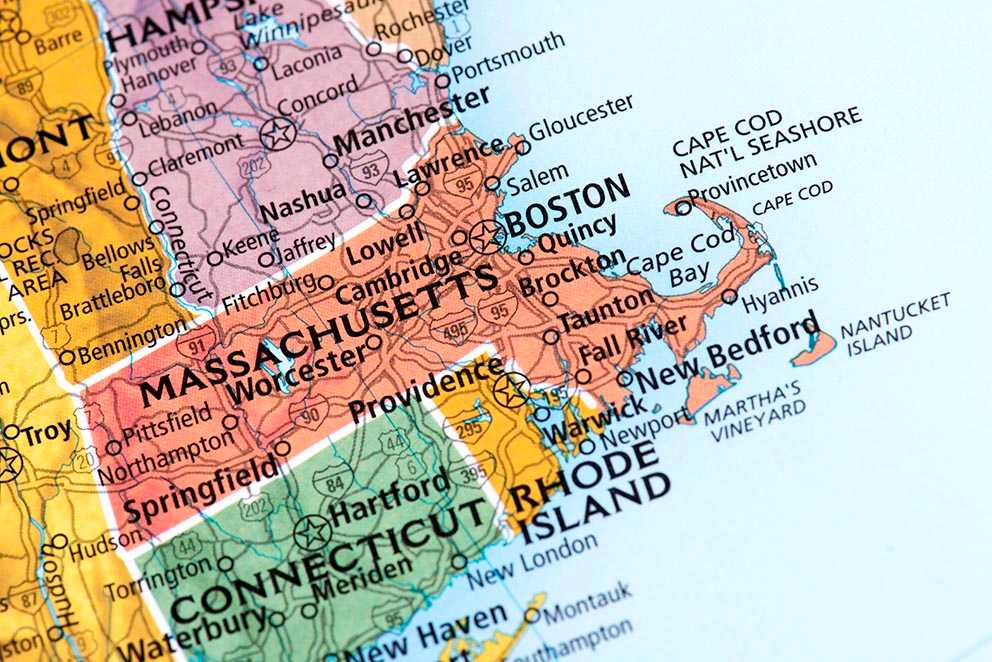
Put down your "Dunkies," step away from the "bubbler" and set aside your liberal bias, because it's time to read these wicked true Beantown stereotypes.
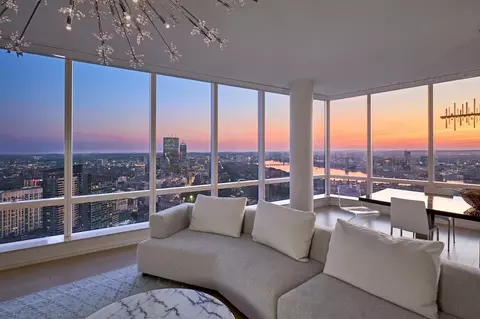
- $6,750,000
- 3Bd
- 5Ba
- 3,172 Sq Ft
New 14 Hours


Medford sits just north of Somerville, between Arlington and Malden in the greater Boston area. Rated one of the best places to live when you are just starting out by Boston Magazine, Medford is home to young professionals, small families, and students. Although students come to Tufts and other Boston area colleges from all over the globe, even with the student population, 60% of Medford citizens are locals who were born in Massachusetts. Some families have been Medford residents for generations. In general, when people move into Medford, they tend to stay.

Source: wikimedia.org
Medford was founded in 1630, making it one of the oldest English settlements in the United States. It was not incorporated as city, however, until 1892. For its first 26 years, Medford was a private plantation owned by the first governor of the Massachusetts Bay Colony, Matthew Cradock, and members of the Cradock family. In 1656, as parcels of land were sold off to other families, members of these families met to make decisions communally and began to act as a town unit. In 1674, they elected a Board of Selectman and had a representative in the colonial legislature by 1689.
The population grew slowly for the next 200 years, then experienced a massive expansion between 1880 and 1900 as farms were divided into residential and commercial parcels. Medford’s population reached over 18,000 by the beginning of the 20th Century. For much of the 1900s, Medford was a major center of industry for Massachusetts and America. Within the 8 square miles of Medford, there were major manufacturers of brick, tile, clipper ships, rum and crackers. Mills in New Hampshire and Lowell, as well as parts of the Middlesex Canal were made with Medford bricks.
While Medford has a had a large Irish American population since the 1800s, West Medford formed one of America’s first African American communities. In 1754, the U.S. Census reported 32 slaves and 15 Free Blacks in Medford. 27 of those slaves were owned by the family of Isaac Royall, one of the founders of Harvard Law School. After emancipation, former slave Belinda Royall successfully sued the Royall estate for an annual pension. Another member of West Medford’s African American community, Prince Hall, drafted Royall’s petition.
Prince Hall, born in Barbados, came to the United States via a trade vessel where he had worked to pay for his passage. He arrived in Boston and settled in Medford as a Free Black at the age of 17. By the age of 25, he owned real estate and secured his eligibility to vote. Hall founded the first African American Freemason Lodge, petitioned the General Court of Massachusetts for a gradual full emancipation in 1777, and in 1787 asking the Commonwealth of Massachusetts to provide education for its African American citizens as it did for its white citizens. Having come to the United States as a Free Black, Hall worked tirelessly to bring about the abolition of slavery. The Medford Historical Society, in conjunction with Tufts and Brandeis Universities, Medford High School, and current Medford African-American residents are currently working to compile and share biographies of the other influential African Americans residents of Medford throughout the city’s history.

Source: wikimedia.org
Medford’s pattern of growth from private plantation to family farms and eventually commercial and residential properties has played a large role in the types of architecture now found in Medford real estate. Since large parcels of farmland were sold and developed incrementally, there are a variety of homes styles, from Queen Anne Victorians and stately Colonials to cozy Bungalows.
Thanks to Medford’s history of brick manufacturing, there are also several older homes made from brick, but even with the brick homes there is variety. For example, the Essex Street brick homes have gables, a distinctly Tudor influence, making them stand apart from other areas of predominantly brick homes such as Lawrence street and Medford Square. The historical Peter Tufts House, located at 350 Riverside Avenue and built in the 1670s is believed to be the United State’s oldest all-brick house.
Within city limits there are three historic districts: the Marm Simonds Historic District in West Medford, the Hillside Avenue Historic District in Hillside, and the Old Ship Street Historic District. If you happen to be considering buying in one of these areas, it is worth noting that homeowners within these districts must seek approval from the Medford Historic District Commission for any exterior renovations or repairs that are visible from the street.

Source: wikimedia.org
Nearly one-third of Medford residents work in education or health care. Jobs in education range from positions at Tufts University to any of the town’s eight public schools and ten private schools. In health care, although Lawrence Memorial Hospital is a large Medford employer, there is an even larger presence of health care insurance companies. Medford is home to several health insurance companies, including Hallmark Health System, which was rated one of the 25 best large companies to work for in Massachusetts by the Boston Globe. Other large health care employers include Aetna Student Health and Tufts Health Plans.
With its available supply of single-family homes in a broad range of budgets, community pride in its history, and proximity to Boston, Medford is quickly becoming a hot market in the greater Boston area. Ideal for young professionals or small families who would like a bit more space but are not interested in the clichéd suburban lifestyle.
Its location on the Mystic River made it a center of industry in the past and now Medford real estate attracts homeowners interested in living near preserved natural beauty without getting too far away from Boston proper. With over twenty parks and three bodies of water, Medford has an abundance of outdoor recreation within its 8.6 square miles. The city has several playgrounds and an abundance of children’s programming through the Medford Public Library, making it a great choice for young families. It is worth noting, however, that less than 20% of the households in Medford report having children.
The recently revamped riverwalk as well as the locally owned shops and restaurants foster a sense of small town community in this densely populated Boston suburb. The hometown pride is evident in the residents’ commitment to preserving the local history.