Things you should know about Alabama before you move there for some tasty food, good music, sports and happening events.
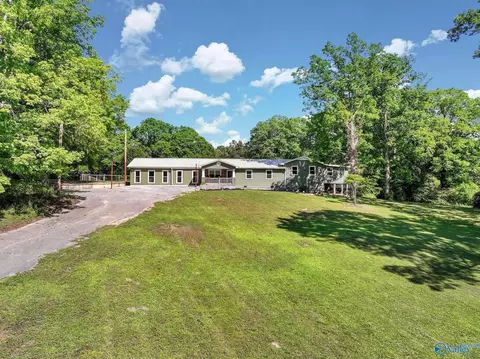
- $479,900
- 4Bd
- 4Ba
- 4,513 Sq Ft
New 3 Hours


When you are looking for a new home and you have or are planning on having children, one of the first things you look at is the school district. First, you determine what school district(s) your home falls into, and what the options are for your children. You look at a ton of information before deciding which one is the best. What are the graduation rates, the test score averages, attendance, teacher-student ratio, and is the school up to the proper standards? You go through everything, but sometimes it’s not enough to sway you towards one over the other. Sometimes, the information is so overwhelming that you can’t understand it clearly enough to make a proper decision.
For families looking for the best school district for their new home in the state of Alabama, similar obstacles tend to arise. There are about 1,541 public and private K-12 schools throughout Alabama, providing education to over 740,000 students and growing. The numbers shift every year and it can be hard to track all of the factors that make one school better than another. In looking at graduation rates, ratios, and other standards, here are the five school districts that came out on top in Alabama.

Source: wikimedia.org
Mountain Brook School District ranks rather high in the state, going well above the state-level and national-level standards. It is located in the city of Mountain Brook, a suburb of 20,600 just outside of Birmingham. There are currently 6 schools within the district, all of which are public, although there is a private school within the city limits that is not a part of the district. Four are elementary schools that have students enrolled from kindergarten through sixth grade. There is one middle school, with grades seventh through ninth, and a high school with grades ten through twelve.
There are about 329 teachers currently employed through Mountain Brook School District, with an average teacher-student ratio of 1:13. The ratio is slightly lower than the rest of the state, which averages a 1:15 teacher-student ratio. Test scores and graduation rates for Mountain Brook are also much higher than state and national averages. The U.S. Census Bureau estimated that the graduation rate for 2010-2014 was at a whopping 99.4%, with about 98% of graduates continuing their education. Test scores are typically 45% higher than the rest of the nation, which has lead the district and its students to be recognized by the U.S. Department of Education and other education organizations.

Source: wikimedia.org
Another suburb of Birmingham, the Homewood City School System consists of five public schools serving 3,907 students. There are three elementary schools, one middle, and one high school. Not a part of the district are two private schools, Our Lady of Sorrows Catholic School and The Islamic Academy of Alabama.
The average graduation rate for Homewood Schools is about 93%, a little higher than the state average of 83%. Test score averages are about 32% higher than the national average, which may be due to a smaller class size. Like Mountain Brook, Homewood schools have a teacher-student ratio of 1:13. The district’s extracurricular activities have be recognized on the state and national levels, especially the Homewood High School Patriot Marching Band, which has participated in multiple national and international events.

Source: flickr.com
The city of Madison has an estimated population of about 46,450 as of 2014, around 9,500 of which are students currently enrolled in the city’s school system. The Madison City School District serves residents of Madison and the nearby town of Triana with eleven K-12 schools. There are seven elementary schools (K-6th grade), two middle schools (7th-8th grade) and two high schools (9th-12th grade). There are seven private schools, but they are not a part of the district.
Madison schools have a higher student-teacher ratio than the rest of the state, matching the national average ratio of 16:1. This does not seem to cause any serious issues for the district, with 95.7% of students graduating high school. Test scores also do not seem to be heavily affected, with averages being about 35% higher than the rest of the nation. The introduction of a second high school, James Clemens High School, in 2012 seemed to have eased some of the academic stress on the district and greatly helped improve student success.

Source: wikimedia.org
The largest district on this list, Hoover City School District has 17 active public schools that serve almost 14,000 students. It is also one of the more recent districts, being established in 1994 and operating ever since. There are 10 elementary schools, three middle schools, two high schools, an intermediate school, and an alternative school in the district. Most likely, the district will continue to grow as the population does; the population was estimated to be around 81,000 in 2010 and had grown to over 84,000 by mid-2014.
Possibly due to its rather large size, Hoover’s 15:1 student-teacher ratio is the same as the state average. Test scores are a little bit higher, with only a 30% difference from the national average. Graduation rates, however, are still notably high at a solid 95%. The district is notable for the awards that its schools have received in recent years. Spain Park High School, for example, is the only school in the country to have received both Nation Blue Ribbon Awards within the same year (2008).

Source: wikimedia.org
Auburn is probably better known as the home to Auburn University, but its school districts are very academically driven. The Auburn City School District includes 10 public schools, with 3 private schools located within the district’s boundaries. Currently, there are eight elementary-level schools, whose grade levels vary from school to school within the K-5th grade range. There is a middle school, J.F. Drake Middle, that includes grades six and seven, and Auburn Junior High School that has grades eight and nine. Auburn High School, the only high school in the district, covers grades ten through twelve. As of 2015, about 8,248 students were currently enrolled.
The district has an average student-teacher ratio of 14:1, which helps with keeping the graduation rate at a steady 94%. Test scores, likewise, come in at about 33% higher than national scores. With the University nearby, many of the district’s students aim for higher education and extracurricular activities often extend to events at the college.