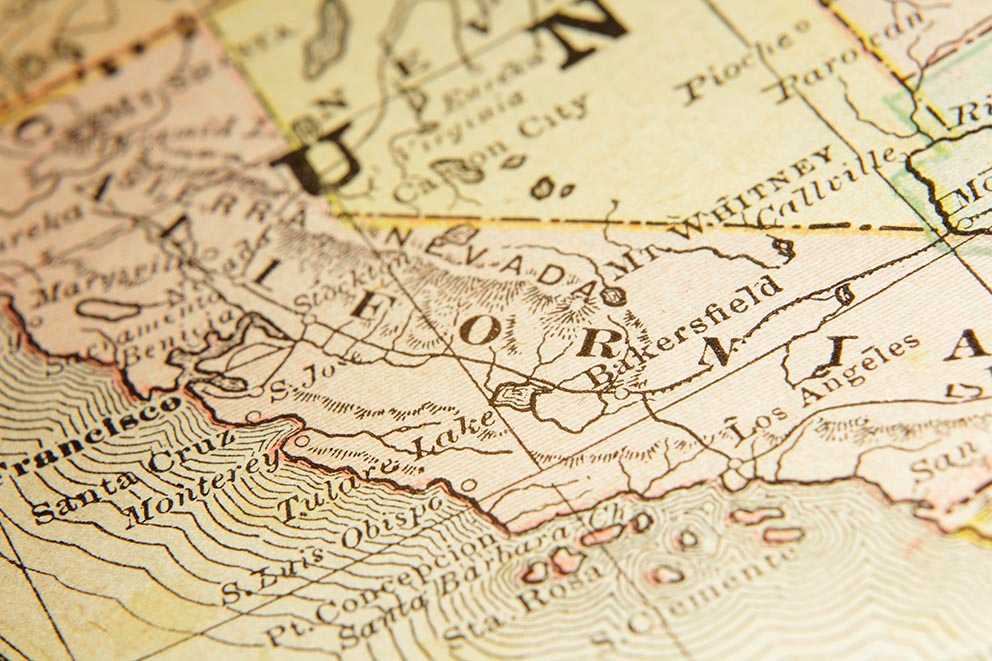
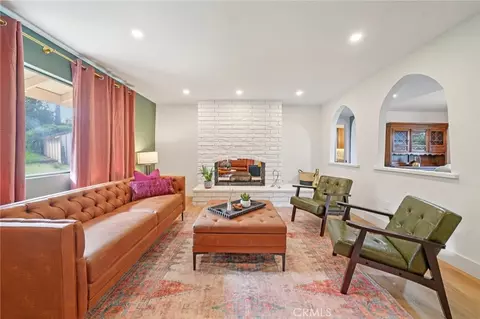
If you’re not already hungry, Riverside is about to change your mind.
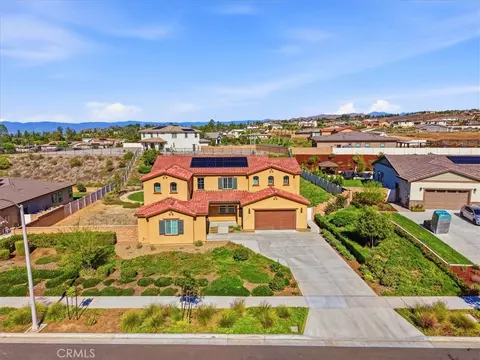
- $1,349,000
- 5Bd
- 5Ba
- 3,676 Sq Ft
New 35 Hours


Downtown Riverside at first glance is a mix of business buildings, government agency offices, big hotels and their parking lots and the downtown convention center. Then, as one travels along the main routes of town, it seems to be a petering off of smaller and smaller businesses until one gets either to the local university campus, the highway, or the shopping mall zones. However, just a few blocks in on every side there nooks and valleys of residential areas, 1950's and 1960's era homes with small front years parked comfortably in rows of tree-lined streets. This is Riverside's downtown living character.
Downtown Riverside CA is also the seat of the County government, so the downtown core is made up of a number offices for county government and a quite a bit of cement. Fortunately, this is only on the main artery running north and south through the center of town. As one gets out a few blocks a number of really prime eating locations begin to pop up, regularly visited by both residents and out-of-towners.
For breakfast anybody who wants a big plate of food pretty quick is going to visit FarmerBoys. This chain is all over Riverside County and serves regular restaurant style breakfast food (eggs, bacon, toast, hash browns) without the full restaurant price. Business visitor types love these locations for great food at low price.
For evening dining, however, there are some premium choices around town. Sbraga & Company is a new one, run by transplants from Brooklyn and top chef Kevin Sbraga. The Metro Diner is also going through an overhaul and is expected to see some changes now that the original Outback owners are in charge with new funding. Two other new faces in the downtown area worth visiting are the Cowford Chophouse and Black Sheep, both cozy places to catch a really tasty meal.
Riverside is definitely an area where one either needs a bike or their own vehicle transportation. While a minimal level of public transportation exists with bus lines, many people walk and bike if they can't drive. A car is pretty much an accepted standard because, like much of Southern California, people don't just stay in Riverside; they go all over the L.A. basin which stretches from the coastline to the San Bernardino desert and Palm Springs or further. Bus routes don't go there.
Like much of Southern California, downtown Riverside enjoys a much warmer weather pattern than the rest of the California. The coldest period may be some occasional rain storms in the winter or the marine layer mornings in May or early June, but the area is mostly arid and hot during the day. Summers can easily get into the triple digits and even winter typically gets down to only the 70s. No surprise, most residents generally dress comfortably for warmer weather except when it rains. Humidity can set in during the early part of summer, making things a bit uncomfortable without air conditioning, but A/C is a common installation in every structure in town.
The eastern side of the City is dominated by the U.C. Riverside campus and multiple university buildings that stretch back to the foothills of the valley. The western borders of the campus are dominated by small shops and food venues for students, university offices, and student housing or parent-visiting hotels. However, get about ten blocks west of that point, and the traditional Riverside residential neighborhoods exist. These are older areas, many built in the 1960's and 1970's with one level homes and flat long roof designs. The occasional park sits every five blocks, and the areas are bordered by main routes with small grocery stores and corner stores for convenience goods. Between all of those areas are the typical variety of fast food restaurants and small businesses.
The City of Riverside currently has more than 11,200 residents. Of that number 90 percent is split almost evenly between Hispanic and Caucasian residents. About ten percent represents African Americans, and the remainder is Asian, Hawaiian or other backgrounds. There are slightly more men than women in the neighborhood, and of the 4,400 residential structures 1,400 are owner-occupied. Rentals make up almost twice as many units, often occupied by students and lower income residents. Of the 3,900 households, more than half are families. The average age of residents is between 20 and 40 but there is a healthy spread of other ages as well.
Residents of the area are fortunate in that they have the benefit of two major parks and a golf course on the western boundaries of the neighborhood. Both Fairmont Park in the north and Mount Rubidoux park in the southwest are large parcels with plenty of non-developed land good for park visits and hiking. In fact, the Boy Scouts have a permanent camp on the north edge side of Mount Rubidoux Park. Finally, at the south end of town there is the Evans Sports Complex, which houses large facilities for a field games and a number of indoor sport activities for individuals and teams.
The area is not the newest development of homes, but downtown Riverside is definitely unique and has its own well-defined character for a Southern California urban area. It does not suffer the blight of some over-developed neighborhoods, but it still is a bona fide city living region. Homes are cozy and retain a neighborhood feel, but they are just blocks from the downtown core as well. The area often attracts slightly bohemian types, young adults, retirees who like warm weather and small properties, and those who need to be close to their work in the area, as well as UCR students. No surprise, the population represents a varied mix of interests.