The list of 50 things you might not know about The Queen City - Cincinnati.
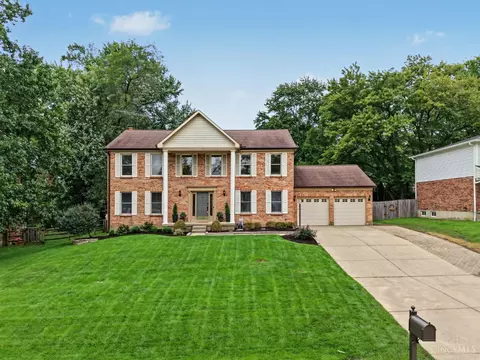
- $664,900
- 3Bd
- 4Ba
- 2,251 Sq Ft
New 15 Hours


Whether you are moving to Cincinnati to take the next step in your career or because you have fallen in love with the Queen City, it makes sense that you want to choose a neighborhood that suits your lifestyle. If you prefer walking, bicycling or taking public transportation — at least part-time — you definitely want to find out where to live in Cincinnati to support your admirable choice. You might worry that - outside of New York City and Chicago - you will have a tough time finding urban enclaves that foster life without a car. While those cities do set the bar pretty high for people who commit to a lifestyle that focuses on alternative transportation modes, you might find yourself surprised at the non-auto potential available in Cincinnati. Walk Score announced Cincinnati was one of its most "walkable cities" in 2011.
There are several factors that you might consider as your explore Cincinnati's vast array of neighborhoods to determine whether they mesh with your ideals without causing you myriad inconveniences. Following are just a few thoughts for you to keep in mind when deciding on the best Cincinnati neighborhood for residents without cars:
As you narrow down your neighborhood options in Cincinnati, consider taking a stroll through one or more of the three following neighborhoods that offer an upbeat and convenient lifestyle for anyone wanting to stay car-free in Cincy.
Featuring plenty of nearby cafes, delis, markets and other creature comforts, this affluent community provides a cozy, small town effect with its central median that serves as a courtyard. The square itself consists of a two-block area around Erie Avenue and features retail shops, restaurants, specialty shops, markets and more. Created in the early 1980s partly as a tribute to New York City's Hyde Park, by a group of neighbors who formed what turned out to become an idyllic neighborhood. The higher price tag does come with amazing benefits for anyone looking for a car-friendly zone. You will find a bustling environment in this neighborhood that imbues the area with a tranquil, yet communal sensibility. Thanks to its wide and well-maintained sidewalks, as well as well-lighted streets, the Hyde Park Square neighborhood makes it easy for joggers to get in a workout at any time of day and for walking commuters to travel to and from work or the bus without safety issues. If cultural attractions are important to you, the Cincinnati Museum and the Krohn Conservatory are nearby. Most of the homes in the area are single family homes that cost anywhere between $200,000 to $500,000 with average cost falling at around $250,000. You might find the cost well worth it to live in an area that organically fosters support for living without a car in Cincinnati.
Often abbreviated as OTR, Over-the-Rhine is one of the largest and most intact historic neighborhoods — particularly notable in its prevalent Italianate architecture — in the United States, according to Wikipedia. The area has also received the second highest rating at Walk Score for the most walkable neighborhoods in Cincinnati. The city also scores high for its public transportation and biking potential. The neighborhood features a population of just over 6,000 people, which as a dense population, contributes to its reliance on alternative transportation. The area also features strong arts community that has manifested in the development of two art schools, several art galleries and plenty of theaters. OTR's development pace has picked up rapidly over the past few years with new construction for housing and businesses next to just as many restoration projects. So you have your choice of a new building and a historic space as you start your search in Over-the-Rhine. You will find fewer single family homes in this neighborhood. Instead, you will find a greater abundance of spacious apartments and condominiums to complement a more urban lifestyle that a car-free life often entails. The price tag on a rehabilitated luxury condominium often runs at a price of around $300,000 and sometimes higher.
Listed as Walk Score's fourth most walkable neighborhood in Cincinnati, CUF might also serve as the most affordable, with homes starting in the $90,000 range. CUF stands for the first letter of three communities — Clifton Heights, University Heights and Fairview — near the University of Cincinnati. The proximity to the university is a large reason for its pedestrian-friendly atmosphere. With so many students and faculty striving to save money, it makes sense that the area has less car traffic and more bicyclists and public transportation passengers. While still a large population, people live more spread out in these communities so you get the benefits of a large population without the immediate density and crowding.