Drop the “z.” There’s no “z.” What are you, a Californian?
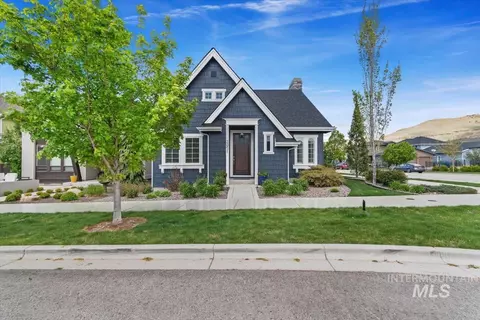
- $899,900
- 5Bd
- 4Ba
- 2,729 Sq Ft
New 13 Hours


When considering a move, you want to go where the wages are high, and the cost of living is low. When you choose the Northwest, Boise Idaho, fits the requirements better than most. Though it is the largest city in Idaho according to Idaho Press-Tribune (1), it costs less to live in Boise than it does in similar metropolitan areas in neighboring states. Additionally, the cost of living in Boise Idaho, is lower than the national average, based on the numbers from the ACCRA Cost of Living Index (2). That is good news when you consider the cost of living in general, but there are a number of individual elements that factor into it. Some of those include the job market and wages, housing costs, the price of groceries, the cost of utilities, and health care.
The median income in Boise may not be in the six-figure range, but Forbes (3) reports that, at $50,354, it is just below what the U.S. Census Bureau (4) says is the national median household income of $53,482. You'll find a diverse range of jobs available in Boise across a variety of industries including agricultural, construction, manufacturing, education, health, and leisure services. In fact, Forbes (5) said that Boise was the number one place to find a job in 2015. That makes sense in light of the fact that it is the capital of one of the states MSN Money (6) says has the fastest job growth. If you are disappointed not to see the software industry on that short list of available jobs in Boise, don't be disenchanted yet. Ryan Woodings of Metageek tells the Boise Valley Economic Partnership (BVPE) (7) that Boise is a software company's dream. The city boasts a high number of high-quality software engineers who love the outdoor lifestyle the area offers. Commutes are short to non-existent, so employees arrive at work fresh and ready to innovate and, because the cost of doing business is relatively low in addition to the cost of living in Boise Idaho, according to the BVPE (8), the Boise Valley is quickly becoming the new Silicon Valley.
You can buy more home for less when you move to Boise. The U.S. Census Bureau (9) says that the national median home price is $305,000. Comparatively, figures from the Intermountain Multiple Listing Service (10) place the median price in Boise at $210,000. It is a definite perk if you're from another state such as California and looking to make a move to the Idaho mountains. You should be able to pay for a home in full from the proceeds of the sale of your previous home or, at the very least, you will have a substantial down payment on your new home in Boise which translates to a low monthly house payment.
Being located in an agricultural state, Boise is positioned perfectly for low prices on the three typical food items people look at when comparing grocery prices from region to region: milk, bread, and meat. Idaho is home to several dairies across the state, and Dairy Herd (13) confirms that Boise pays the second-lowest prices in the nation for milk. Though you may associate Boise with the potatoes that Idaho is famous for, the state also grows wheat, placing bread prices at a low $1.84 per loaf compared to the national average of $2.37 Nation Master (14) lists. Plus, the Idaho Beef Industry (15) reports that cattle are raised in every county in Idaho, including Boise's Ada County. Since your meat won't have to travel far to get to you in Boise, you'll pay around $2.30 per pound for ground beef compared to the $4.08 per pound that the Bureau of Labor Statistics (16) says is the national average. When it comes to utilities, Boise may not be the cheapest, but it does rank in the 10 least expensive. The many powerful rivers that flow through Idaho provide the state with an inexpensive source of energy: hydropower. Idaho Power (17) says that translates to an average of $105 per month in electricity costs for Boise residents. Even if you opt to heat your Boise home with natural gas, you'll pay less. Natural Gas Local (18) reveals that Boise prices are almost 42 percent less than the national average, with Boise residents paying about $9.56 per thousand cubic feet compared to $16.40 for the same nationally.
The Affordable Healthcare Act was supposed to level the paying field for healthcare across the country and, according to price comparisons on eHealth (19) and in the Spokesman-Review (20), the $240 Boise residents pay for health insurance is right in line with the average of $253. When you are in need of quality healthcare, you want to know that it is available, and Boise delivers. Home to St. Luke's Boise Medical Center (21), Boise boasts the only children's hospital in the state. St. Luke's also has the largest clinic among the Mountain States Tumor Institute facilities, as well as high skilled heart specialists and a cutting-edge minimally invasive surgery center.